Mochi Recipe Mochiko: 2025 Bright Powerful Delight
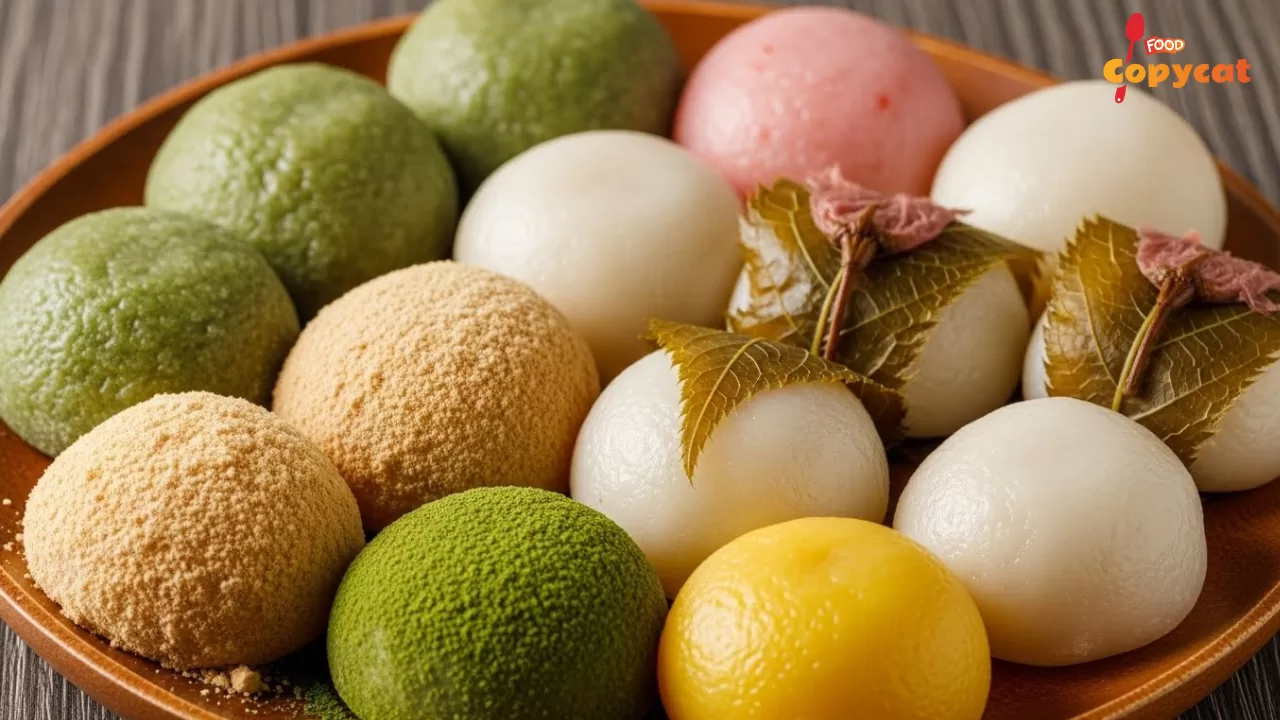
Mochi Recipe made with Mochiko is one of the easiest and most popular Japanese treats you can prepare at home. This soft, chewy dessert is loved for its simplicity, delightful texture, and ability to be customized with countless fillings. Using Mochiko flour (sweet rice flour) ensures the perfect consistency and helps even beginners make smooth, stretchy mochi with minimal effort. Whether you want to enjoy it plain, coat it in cornstarch, or fill it with red bean paste or strawberries, this recipe offers endless creative possibilities.
In this article, you’ll learn how to make mochi Recipe using Mochiko, the essential ingredients involved, step-by-step instructions, serving ideas, ingredient substitutes, and nutritional information.
How to Make Mochi Recipe Mochiko?
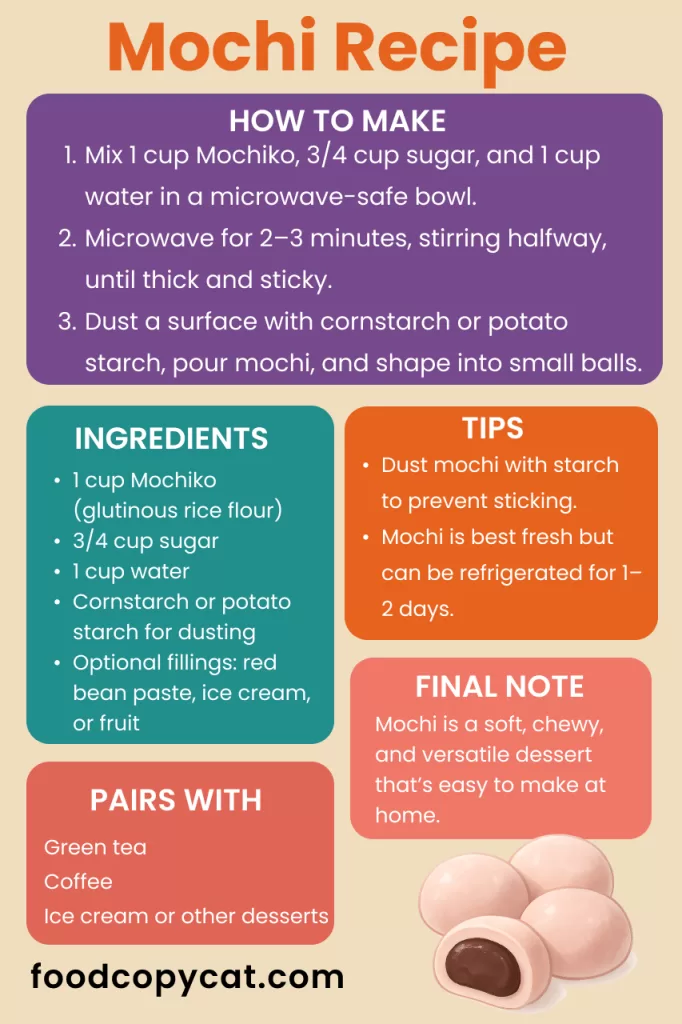
Making mochi with Mochiko is a simple process that involves mixing sweet rice flour with sugar and water, then steaming or microwaving the batter until it becomes thick and stretchy. Once cooked, the dough is dusted with starch to prevent sticking, shaped into balls, and filled or served plain. Mochi Recipe ensures the perfect chewy texture, making this method beginner-friendly and reliable compared to traditional pounding methods.
Key Ingredients
- 1 cup Mochiko (sweet rice flour)
- 1 cup sugar
- 1 cup water
- ½ cup cornstarch or potato starch (for dusting)
- Optional: red bean paste, strawberry pieces, matcha powder, cocoa powder
Instructions
1. Prepare the Mochiko Batter
In a mixing bowl, combine Mochiko flour, sugar, and water to form a smooth batter. Mix well until no lumps remain, as a well-mixed batter ensures even cooking and a uniform texture in the final mochi. The mixture should have a thin, pancake-like consistency, which will thicken once heated. If you want to add flavorings like matcha or cocoa powder, whisk them in at this stage. Proper mixing helps achieve soft, chewy mochi Recipe.
2. Cook the Batter Until Thick and Sticky
Pour the batter into a heat-safe dish and cook it either on the stovetop or in the microwave. If microwaving, heat for 1 minute, stir, and repeat until the mixture becomes thick, glossy, and stretchy. The color will turn slightly translucent, indicating it is fully cooked. Cooking is a crucial stage because undercooked mochi will be mushy, while overcooked mochi becomes tough. Stir frequently to avoid dry spots and achieve even texture.
3. Dust a Surface Generously With Starch
Prepare your working surface by spreading a generous layer of cornstarch or potato starch to prevent the mochi from sticking. Mochi is naturally very sticky, so a well-starch-coated board makes shaping and handling easier. Once the cooked dough is placed on the surface, the starch helps form smooth edges and prevents tearing. This step also ensures a cleaner, more manageable process when flattening and cutting the dough into pieces.
4. Transfer the Hot Mochi Dough Carefully
Using a spatula, scrape the hot mochi Recipe dough onto the starch-covered surface. Be cautious, as the dough retains heat and can stick to utensils easily. Spread a light layer of starch on top to reduce stickiness, allowing you to touch and shape it comfortably. Press gently to flatten the dough slightly. Working while the dough is still warm makes shaping easier and helps achieve a smooth, pliable texture for filling or rolling.
5. Flatten the Dough and Cut Into Portions
Using your hands or a rolling pin dusted with starch, flatten the dough to your desired thickness. Keep the surface generously coated with starch to prevent sticking. Once flattened, slice the dough into equal pieces using a knife or dough cutter. Consistent sizing helps each mochi cook evenly and improves presentation. Cutting the dough while warm ensures clean edges and prevents tearing, making it easier to fill and shape later.
6. Add Your Desired Filling
Take each mochi piece and gently flatten it into a small circle. Place a small amount of filling such as red bean paste, fruit, or sweet cream in the center. Bring the edges together and pinch to seal tightly, ensuring the filling stays enclosed. Handle gently to avoid tearing the dough. Filling your mochi Recipe adds flavor and variety, making each bite more enjoyable. Lightly dust the finished pieces with starch to keep them smooth.
7. Shape and Smooth Each Mochi Ball
Once sealed, roll each piece between your palms to create a smooth, round shape. The starch coating prevents sticking and gives the mochi a clean surface. Shaping them carefully improves appearance and helps maintain the soft, chewy texture when served. Ensure there are no cracks or gaps, as these can cause the filling to leak. Allow the mochi Recipe to rest for a few minutes to firm up slightly before serving.
8. Let the Mochi Set Before Serving
Place the shaped mochi pieces on a tray dusted with starch and allow them to rest for about 10–15 minutes. This helps the dough firm up slightly and prevents sticking when handled. Allowing them to set also helps the filling stabilize inside. Once they are slightly cooled and firmer, they are ready to serve. Resting time enhances overall texture and ensures each mochi maintains its soft, chewy consistency.
Tips for a Perfect Mochi Recipe Mochiko
- Use fresh Mochiko flour for the best texture.
- Mix batter thoroughly to avoid lumps.
- Dust hands and tools with starch to prevent sticking.
- Do not overcook; it can make the dough tough.
- Keep fillings small to avoid tearing.
What to Serve With Mochi Recipe
1. Green Tea (Matcha Tea)
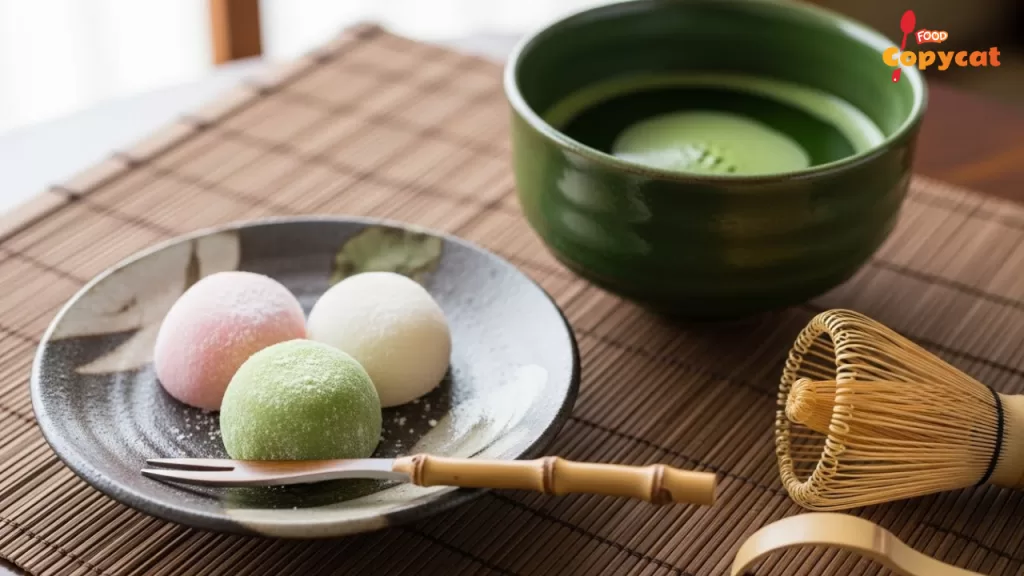
Mochi pairs beautifully with warm green tea, especially matcha, because the earthy, slightly bitter flavor helps balance the sweetness of the dessert. The combination creates a comforting Japanese-style treat that is both soothing and refreshing. Matcha also cleanses the palate, allowing you to enjoy each bite of mochi with a renewed taste. This pairing is perfect for tea time, light snacks, or cultural dessert experiences.
2. Fresh Fruit Slices
Serving mochi with fresh fruits like strawberries, mangoes, or kiwi adds a bright, refreshing contrast to its chewy sweetness. The juiciness of the fruit complements the soft mochi Recipe texture, creating a balanced and vibrant dessert plate. Fruits also enhance presentation, making the treat more colorful and inviting. This combination is ideal for summer gatherings, brunch spreads, or lighter dessert options that offer both flavor and freshness.
3. Vanilla Ice Cream
Mochi and vanilla ice cream create a delightful combination of warm and cold textures. The creamy sweetness of the ice cream enhances the chewy bite of the mochi, offering a satisfying contrast. This pairing is especially great for guests who enjoy fusion desserts. You can even dice the mochi Recipe into pieces and sprinkle them over ice cream for added texture. It’s a fun and refreshing treat for warm weather.
4. Sweet Red Bean Soup
In traditional Japanese cuisine, mochi is often enjoyed with sweet red bean soup (oshiruko or zenzai). The warm, sweet broth softens the mochi slightly, creating a comforting dish that is perfect for cold days. The mild earthiness of the beans pairs wonderfully with the chewy rice cake. This combination provides warmth, nostalgia, and the essence of classic Japanese flavors in one delightful bowl.
5. Whipped Cream and Berries
Pairing mochi with whipped cream and berries creates a dessert that feels light yet indulgent. The soft sweetness of the cream complements the chewy mochi Recipe, while the tart berries add freshness and balance. This combination is visually appealing and works beautifully for parties or elegant dessert trays. The texture contrast and delicate flavors make it a crowd-pleasing choice for all ages.
6. Chocolate Sauce Drizzle
Drizzling chocolate sauce over mochi turns it into a rich and decadent treat. The sweetness of the chocolate complements the mild flavor of the mochi while adding a luxurious finish. This pairing is perfect for chocolate lovers who want a simple yet indulgent dessert. You can use dark, milk, or white chocolate depending on preference. It transforms plain mochi into a gourmet experience with minimal effort.
Ingredient Substitutes
1. Glutinous Rice Flour Instead of Mochiko
If Mochiko is not available, you can use regular glutinous rice flour as a substitute. While the texture may be slightly softer or stickier, it still produces delicious mochi Recipe. Adjust the water slightly if needed, as glutinous rice flour absorbs moisture differently. This substitute works well for both plain and filled mochi and maintains the chewy consistency most people love in traditional Japanese rice cakes.
2. Coconut Flour for Flavor Variation
Although not traditional, coconut flour can be mixed with Mochiko to add a mild tropical flavor to the mochi. Since coconut flour absorbs more liquid, only use a small amount mixed with sweet rice flour to avoid a dry texture. This substitute works best for flavored mochi versions like vanilla, chocolate, or fruit-filled varieties. It adds a subtle aroma and a unique twist to the classic recipe.
3. Potato Starch for Dusting Instead of Cornstarch
Potato starch makes an excellent alternative to cornstarch for dusting mochi Recipe. It has a smooth texture that helps prevent sticking while maintaining the mochi’s soft and delicate surface. Many Japanese recipes traditionally use potato starch for its silky feel and neutral taste. Using potato starch can even make shaping easier, especially for beginners who find mochi sticky. It provides a clean finish and improves handling.
4. Sugar Substitutes Like Honey or Maple Syrup
If you want to reduce refined sugar, honey or maple syrup can be used, but they change the moisture content slightly. Reduce the water in the recipe and add the syrup slowly to achieve the right consistency. These alternatives add a subtle flavor and natural sweetness that pairs beautifully with fillings like fruit or red bean paste. It’s a great option for those seeking a less processed sweetener.
5. Corn Flour as a Dusting Alternative
Corn flour can also be used to prevent sticking if cornstarch or potato starch is unavailable. It has a slightly different texture but still helps coat the mochi effectively. Use it lightly to avoid changing the flavor of the dessert. This substitute works best for plain mochi shapes rather than filled mochi Recipe, as it adds a firmer coating. It’s a practical, accessible option when other starches are not on hand.
6. Milk or Coconut Milk Instead of Water
Using milk or coconut milk instead of water creates a richer, creamier mochi with enhanced flavor. Coconut milk adds a subtle tropical taste, while regular milk makes the dough softer. Both options slightly increase the sweetness, allowing you to reduce sugar if preferred. This substitute works especially well for dessert-style mochi Recipe with creamy fillings. It creates a more decadent texture and elevates the overall flavor profile.
Nutritional Facts (Per Tablespoon)
| Nutrient | Amount |
| Calories | 37 kcal |
| Carbohydrates | 8.5 g |
| Protein | 0.3 g |
| Fat | 0.1 g |
| Sugar | 4.5 g |
| Fiber | 0.1 g |
| Sodium | 1 mg |
Final Thoughts
Mochi Recipe Mochiko is one of the easiest and most enjoyable Japanese desserts to prepare at home. Its soft, chewy texture and mild flavor make it a versatile treat that pairs beautifully with fruit, ice cream, tea, and a variety of fillings. Whether you prefer classic red bean mochi Recipe or creative flavored versions, this recipe offers endless possibilities to experiment and enjoy. With simple ingredients and clear, step-by-step instructions, even beginner cooks can master this traditional delicacy.
Checkout for more Desserts Recipes here.