Pasta and Shrimp Salad: 7 Amazing & Delicious Recipe Tips
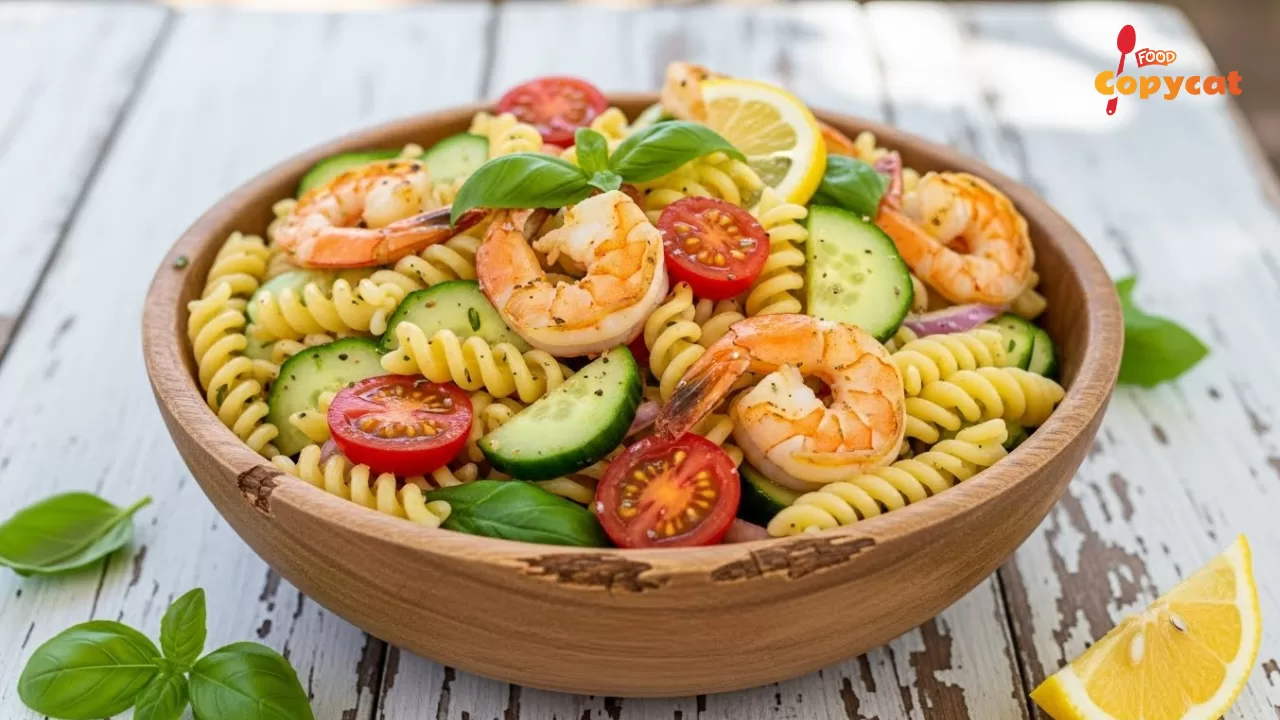
Pasta and shrimp salad is a refreshing, satisfying dish that perfectly balances tender shrimp, al dente pasta, and vibrant vegetables in a light yet flavorful dressing. This seafood pasta salad is ideal for summer lunches, dinner parties, or meal prep because it is easy to prepare and stays delicious even when served cold. Whether you are looking for a healthy shrimp pasta salad or a creamy shrimp pasta variation, this recipe adapts beautifully to your taste.
Packed with protein, texture, and freshness, pasta and shrimp salad works well as a main dish or a hearty side. With simple ingredients and clear steps, anyone can create this restaurant-quality cold shrimp pasta salad at home without stress.
How to Make Pasta and Shrimp Salad?
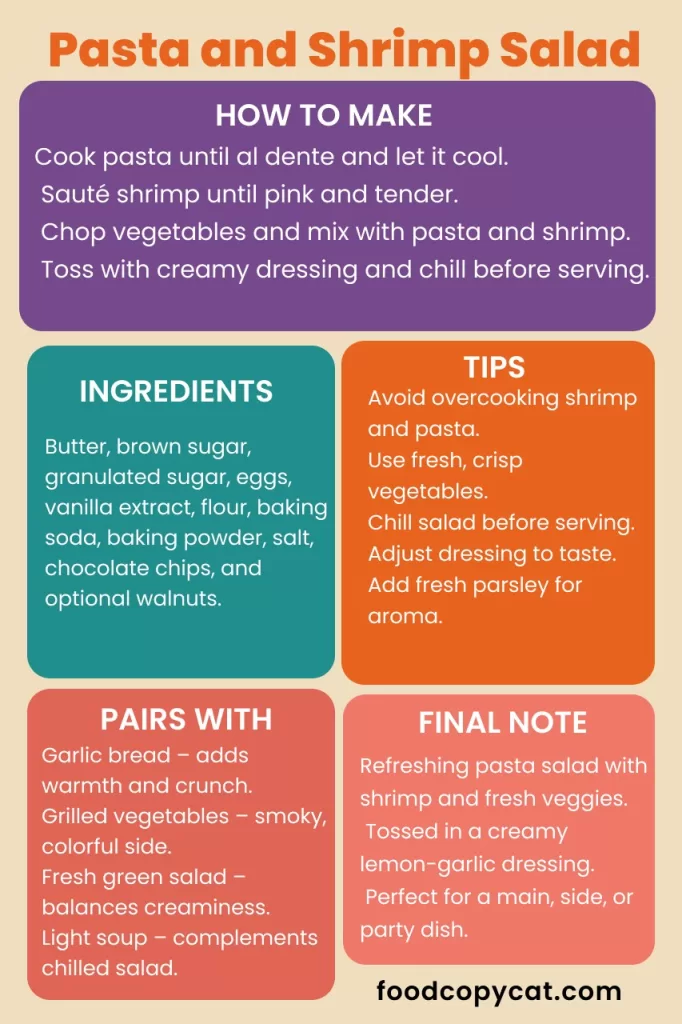
Making pasta and shrimp salad is a straightforward process that focuses on balance and freshness. The pasta is cooked until perfectly tender, while shrimp is lightly seasoned and cooked just until juicy. Fresh vegetables add crunch, and a well-seasoned dressing brings everything together. Once mixed, the salad is chilled to allow the flavors to blend. This shrimp pasta salad recipe is simple yet versatile, making it suitable for quick meals or special occasions.
Key Ingredients
- Pasta (penne or rotini): 2 cups
- Shrimp (peeled and deveined): 300 grams
- Olive oil: 3 tablespoons
- Cherry tomatoes (halved): 1 cup
- Cucumber (diced): 1 cup
- Red onion (finely chopped): ¼ cup
- Fresh parsley (chopped): 2 tablespoons
- Lemon juice: 2 tablespoons
- Mayonnaise or Greek yogurt: ½ cup
- Garlic (minced): 1 teaspoon
- Salt: 1 teaspoon
- Black pepper: ½ teaspoon
Instructions
1. Cook the Pasta Properly
Start by boiling the pasta in a large pot of well-salted water, as this is the only chance to season it from inside. Cook until al dente so the pasta holds its shape when mixed with dressing. Overcooked pasta can become mushy in a cold shrimp pasta salad. Drain completely and rinse briefly with cold water to stop further cooking. Let the pasta cool fully before combining to maintain texture and prevent the dressing from separating.
2. Prepare the Shrimp
Season the shrimp lightly with salt and black pepper. Heat olive oil in a pan over medium heat and cook the shrimp for 2–3 minutes on each side until they turn pink and opaque. Avoid overcooking, as shrimp can become rubbery. Once cooked, remove them from heat and allow them to cool slightly before adding to the salad. This step keeps the shrimp juicy and flavorful.
3. Chop the Fresh Vegetables
Dice the cucumber, halve the cherry tomatoes, and finely chop the red onion and parsley. Fresh vegetables bring crunch, color, and balance to this cold shrimp pasta salad. Make sure the vegetables are evenly cut to ensure every bite has a consistent texture. Freshness at this stage significantly impacts the overall taste of the pasta and shrimp salad.
4. Prepare the Dressing
In a mixing bowl, combine mayonnaise or Greek yogurt with lemon juice, minced garlic, salt, and black pepper. Whisk until smooth and creamy. This dressing provides richness while keeping the salad light and refreshing. Adjust seasoning according to taste. A well-balanced dressing enhances the natural sweetness of shrimp and complements the pasta perfectly.
5. Combine Pasta and Vegetables
In a large bowl, add the cooked pasta and all the chopped vegetables. Gently toss them together to distribute colors and textures evenly. This step ensures that the vegetables mix thoroughly with the pasta before adding shrimp and dressing, preventing uneven flavor distribution in the shrimp pasta salad recipe.
6. Add Shrimp and Dressing
Add the cooled shrimp to the pasta mixture, then pour the dressing evenly over the top. Use a soft spatula to gently fold everything together, ensuring the shrimp stay intact. Mixing carefully prevents the shrimp from breaking and helps the dressing coat every ingredient. This step brings the pasta and shrimp salad together, creating a creamy, well-balanced dish with evenly distributed flavors.
7. Chill Before Serving
Cover the salad and refrigerate for at least 30 minutes before serving. Chilling allows the flavors to blend and intensify, improving overall taste and texture. This step is especially important for a cold shrimp pasta salad, as it enhances freshness and creaminess. Before serving, give the salad a gentle stir and adjust seasoning if needed for best results.
Tips for a Perfect Pasta and Shrimp Salad
- Do not overcook the shrimp to keep them tender
- Always cool pasta before mixing with dressing
- Use fresh lemon juice for better flavor
- Chill the salad before serving for best taste
- Adjust dressing quantity to your preferred creaminess
What to Serve With
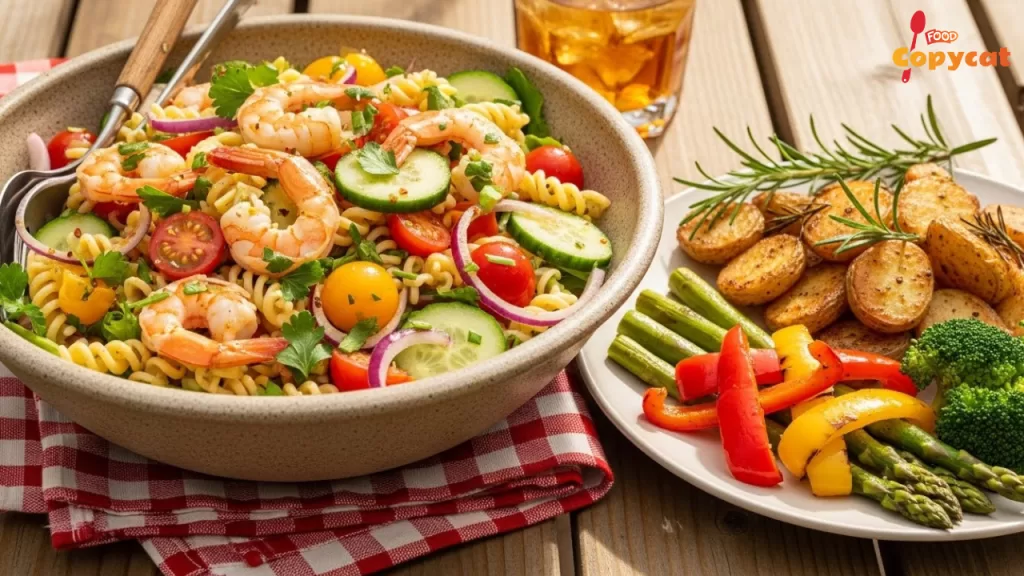
1. Garlic Bread
Garlic bread pairs excellently with pasta and shrimp salad by adding warmth and crunch. The buttery, garlicky flavor contrasts beautifully with the chilled, creamy salad. It also helps make the meal more filling without overpowering the delicate seafood taste. This pairing works well for casual lunches, family dinners, or gatherings where you want a balanced yet comforting meal.
2. Grilled Vegetables
Grilled vegetables such as zucchini, bell peppers, or asparagus add a smoky depth that complements the creamy shrimp pasta salad. Their charred flavor enhances the freshness of the salad while adding nutritional value. This combination creates a colorful, balanced plate and works especially well for summer meals or outdoor gatherings where lighter seafood dishes are preferred.
3. Fresh Green Salad
A light green salad with a simple vinaigrette pairs perfectly with pasta and shrimp salad. Leafy greens add freshness, fiber, and a crisp texture that balances the creaminess of the pasta dish. This pairing is ideal for those seeking a healthier, refreshing meal while keeping the overall flavor profile clean and satisfying.
4. Soup
Serving a light soup, such as vegetable or tomato soup, alongside shrimp pasta salad creates a comforting yet balanced meal. The warmth of the soup contrasts nicely with the chilled salad. This combination is especially suitable during cooler weather when you want something refreshing but still comforting and complete.
5. Roasted Potatoes
Roasted potatoes add a hearty and satisfying element to pasta and shrimp salad. Their crispy exterior and soft interior provide texture contrast and make the meal more filling. Lightly seasoned potatoes complement the salad without overwhelming the shrimp’s delicate flavor, making this pairing ideal for dinner settings.
Ingredients Substitutes
1. Pasta Alternatives
Whole wheat, gluten-free, or chickpea pasta can replace regular pasta in this shrimp pasta salad. These alternatives provide added fiber or accommodate dietary needs while maintaining structure. Choose shapes like rotini or penne, as they hold dressing well. Proper cooking is essential to avoid mushy texture, especially when serving the salad chilled.
2. Shrimp Substitutes
If shrimp is unavailable, cooked chicken breast, canned tuna, or crab meat can be used instead. These proteins work well with the creamy dressing and pasta base. Ensure substitutes are well-seasoned to maintain flavor balance. While shrimp offers a light seafood taste, these alternatives provide flexibility without compromising texture or satisfaction.
3. Dressing Replacement
Greek yogurt is an excellent substitute for mayonnaise if you prefer a lighter version. It reduces fat content while adding tanginess and protein. You can also mix yogurt with a small amount of olive oil for creaminess. This option keeps the pasta and shrimp salad fresh and suitable for health-conscious eaters.
4. Vegetable Swaps
Bell peppers, sweet corn, olives, or avocado can replace cucumber or tomatoes. These vegetables add different textures and flavors, allowing customization based on preference or availability. Choosing fresh, firm vegetables ensures the shrimp pasta salad remains crisp and visually appealing without excess moisture.
5. Lemon Juice Alternative
Apple cider vinegar or white wine vinegar can replace lemon juice if needed. These substitutes provide acidity and brightness to balance the creamy dressing. Use small amounts to avoid overpowering the salad. Proper acidity is key to enhancing shrimp flavor and preventing the pasta and shrimp salad from tasting heavy.
Nutritional Facts (Per Tablespoon)
| Nutrient | Amount |
| Calories | 25 kcal |
| Protein | 1.5 g |
| Fat | 1.8 g |
| Carbohydrates | 1.2 g |
| Sodium | 60 mg |
Final Thoughts
Pasta and shrimp salad is a versatile, crowd-pleasing dish that combines simplicity with elegance. Its balance of tender shrimp, perfectly cooked pasta, and fresh vegetables makes it suitable for everyday meals and special occasions alike. Whether served as a main dish or a side, this shrimp pasta salad delivers flavor, texture, and nutrition in every bite. The ability to customize ingredients and adjust the dressing ensures it fits various dietary needs and taste preferences.
Chilled and refreshing, it stands out as an ideal summer dish while remaining comforting year-round. Once you try this recipe, it will likely become a regular addition to your meal rotation due to its ease and irresistible taste.
Checkout for more Salads Recipes here.