
Cheddars Croissant Recipe: 7 Irresistible Happy Bakes
The cheddars croissant recipe is a perfect blend of buttery layers and rich, cheesy flavor that turns a simple pastry into a bakery-style delight. Loved for its flaky texture and savory filling, this recipe is ideal for breakfast, brunch, or even a light dinner. Whether you are a home baker or just experimenting with savory pastries, cheese cheddars croissants are surprisingly easy to prepare with the right technique.
Using simple ingredients and clear steps, you can recreate that golden, crisp exterior and soft, melty interior at home. This recipe focuses on balance—sharp cheddar cheese, soft dough, and gentle baking—to ensure consistent results. If you enjoy homemade croissants, cheesy breakfast pastries, or flaky baked goods, this guide will help you master a delicious classic with confidence.
How to Make Cheddars Croissant Recipe?
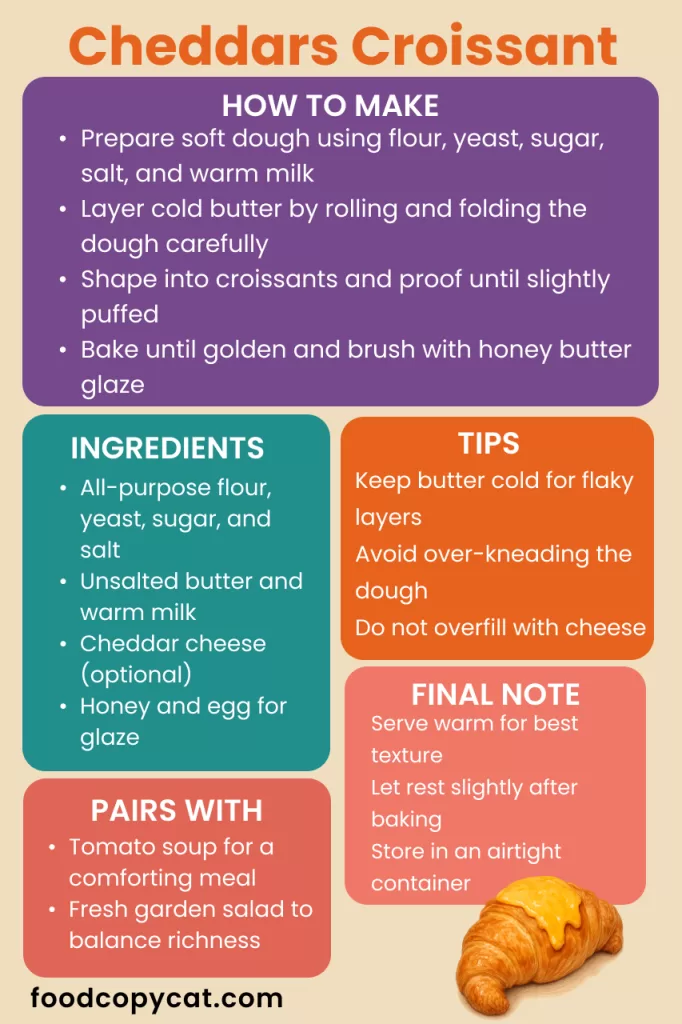
The cheddars croissant recipe is based on layering dough with butter, shaping it carefully, and filling it with cheddar cheese before baking. The key process involves rolling the dough evenly, adding cheese without overfilling, and allowing proper resting time so the croissants bake evenly. Heat control and spacing on the baking tray help achieve a crisp outer layer while keeping the inside soft and cheesy. This savory cheddars croissant recipe relies on patience and precision rather than complicated techniques.
Key Ingredients
- All-purpose flour – 2 ½ cups
- Instant yeast – 2 teaspoons
- Sugar – 1 tablespoon
- Salt – 1 teaspoon
- Unsalted butter (cold) – 200 grams
- Milk (warm) – ¾ cup
- Sharp cheddar cheese (grated) – 1 ½ cups
- Egg – 1 (for egg wash)
Instructions
1. Prepare the Dough Base
Begin by mixing flour, yeast, sugar, and salt in a large bowl. Gradually add warm milk while stirring until a soft dough forms. Knead gently until smooth but not sticky, as overworking can affect flakiness. Cover the dough and let it rest in a warm place until it slightly rises. This resting phase allows gluten development, which is essential for structured layers in a cheddar croissant recipe and ensures even rolling later.
2. Incorporate the Butter Layers
Roll the rested dough into a rectangle and place cold butter in the center. Fold the dough over the butter carefully, sealing the edges. This step is critical for creating flaky layers. Roll gently without pressing too hard, keeping the butter intact inside. Chill the dough briefly before the next roll to maintain clean layers and avoid butter leakage during baking.
3. Roll and Fold the Dough
Roll the chilled dough into a long rectangle and fold it into thirds, like a letter. This folding technique creates multiple layers of dough and butter. Rotate the dough, roll again, and fold once more. Resting the dough between folds is important to relax the gluten and prevent tearing. This repeated rolling and folding process gives the cheddars croissant recipe its signature flaky texture and light structure.
4. Shape the Croissants
Roll the laminated dough into a thin sheet and cut it into long triangular shapes. Sprinkle grated cheddar cheese near the wider end of each triangle. Roll the dough tightly toward the tip, forming the classic cheddars croissant shape while keeping the cheese enclosed. Proper shaping ensures even baking and prevents cheese from leaking. Place the croissants seam-side down to help them hold their shape during proofing.
5. Proof the Croissants
Arrange the shaped croissants on a lined baking tray, leaving enough space between them. Cover lightly and allow them to proof until they appear puffy and slightly expanded. Proofing helps improve softness and enhances the final texture. Skipping or rushing this step can result in dense croissants. Proper proofing allows the dough to rise evenly, producing light, airy layers once baked.
6. Apply Egg Wash
Whisk the egg thoroughly and gently brush it over each croissant. The egg wash creates a glossy finish and helps achieve an appealing golden color. Avoid brushing the edges, as it can seal layers and reduce flakiness. Apply evenly without letting excess drip onto the tray. This step enhances both appearance and texture, making the cheddars croissants look bakery-fresh once baked.
7. Bake to Golden Perfection
Bake the croissants in a preheated oven at 190°C (375°F) until golden brown and fully puffed. The heat causes the butter layers to steam, creating a flaky texture while melting the cheddar inside. Rotate the tray halfway if needed for even browning. Once baked, allow the croissants to cool slightly before serving so the layers set and the cheese settles properly.
Tips for a Perfect Cheddars Croissant Recipe
- Always use cold butter to maintain flaky layers
- Choose sharp cheddar for stronger flavor
- Avoid overfilling to prevent cheese leakage
- Allow proper resting time between folds
- Bake on the middle rack for even browning
What to Serve With

1. Fresh Garden Salad
A crisp garden salad pairs well with the richness of cheddar croissants. Fresh vegetables like lettuce, cucumbers, and tomatoes provide a refreshing contrast to the buttery pastry. A light vinaigrette enhances flavor without overpowering the cheese. This pairing works especially well for lunch or brunch, creating a balanced meal that feels light yet satisfying. The freshness of the salad complements the savory croissant beautifully.
2. Tomato Soup
Tomato soup is a classic companion for cheesy croissants. Its mild acidity cuts through the richness of butter and cheddar, creating a comforting balance of flavors. The warm soup enhances the croissant’s flaky texture, making each bite more enjoyable. This pairing is perfect for cooler days or a cozy meal. Together, they create a satisfying combination that feels both indulgent and comforting.
3. Scrambled Eggs
Soft scrambled eggs add protein and make the croissants more filling. Their creamy texture pairs well with the flaky layers of the pastry. This combination works especially well for breakfast or brunch, offering a hearty yet simple meal. Light seasoning keeps the focus on the cheddars croissants flavor while enhancing overall richness. It’s an excellent option when you want a satisfying start to the day.
4. Grilled Vegetables
Grilled vegetables such as bell peppers, zucchini, and mushrooms complement the savory nature of cheddar croissants. Their smoky flavor adds depth and balance to the buttery pastry. This pairing is ideal for those who prefer a wholesome, vegetable-forward meal. The contrast between crisp vegetables and flaky croissants creates a satisfying texture combination that works well for lunch or a light dinner.
5. Fruit Platter
A fresh fruit platter provides a natural sweetness that balances the savory cheddar croissant. Fruits like apples, grapes, and berries refresh the palate and lighten the meal. This pairing is ideal for brunch or casual gatherings. The freshness of fruit prevents the meal from feeling too heavy while adding color and nutritional value to the plate.
Ingredients Substitutes
1. Butter Substitute
If unsalted butter is unavailable, high-fat margarine can be used as an alternative. Choose a variety designed for baking to maintain structure. While the flavor may be slightly less rich, proper chilling and folding will still produce flaky layers. Avoid low-fat substitutes, as they contain more water and can ruin lamination. Keeping the substitute cold is essential for achieving proper texture.
2. Cheddar Cheese Alternative
When cheddar cheese is unavailable, gouda or mozzarella can be used. Gouda offers a creamy texture with mild sweetness, while mozzarella provides excellent melting properties. Although these alternatives lack sharpness, they still create a delicious filling. For best results, use low-moisture cheese to prevent sogginess. Adjust seasoning slightly to maintain balanced flavor in the croissants.
3. Milk Replacement
Plant-based milk such as almond, soy, or oat milk can replace regular milk. Always choose unsweetened versions to preserve the savory taste. These alternatives work well for dough hydration and texture. Oat milk provides a slightly richer consistency, making it a good option. Ensure the milk is warm, not hot, to activate yeast properly and support even dough development.
4. Flour Option
Bread flour can replace all-purpose flour if you prefer a slightly chewier texture. Its higher protein content strengthens gluten, giving cheddars croissant more structure. This option is useful if you want a bakery-style bite. However, be careful not to overwork the dough. A balance between elasticity and tenderness is key for achieving flaky yet soft croissants.
5. Egg Wash Substitute
If you prefer an egg-free option, milk or cream can be brushed over the cheddars croissant. While this substitute won’t produce the same glossy finish, it still helps achieve light browning. Cream works better than milk for color. Apply gently to avoid sealing layers. This alternative is suitable for dietary restrictions without significantly affecting taste or texture.
Nutritional Facts (Per Tablespoon)
| Nutrient | Amount |
| Calories | 45 kcal |
| Fat | 3.5 g |
| Protein | 1.2 g |
| Carbohydrates | 2.8 g |
| Calcium | 30 mg |
Final Thoughts
The cheddars croissant recipe is a rewarding way to enjoy bakery-quality pastries from your own kitchen. With its crisp exterior, soft layers, and rich cheesy center, it delivers comfort and flavor in every bite. This recipe is ideal for both beginners and experienced bakers who enjoy experimenting with savory pastries.
By following proper folding, resting, and baking techniques, you can consistently achieve excellent results. Whether served for breakfast, brunch, or as a snack, cheddar croissants remain versatile and satisfying. With simple ingredients, flexible substitutes, and thoughtful pairings, this homemade cheddar croissant recipe proves that indulgent baking does not have to be complicated—just carefully crafted and enjoyed.
Checkout for more Baked Dishes Recipes here.