

Irresistible cheese seasonings Recipe [2025]
Cheese seasonings are one of the easiest ways to instantly elevate the flavor of your meals and snacks. From popcorn and fries to pasta and roasted vegetables, a sprinkle of this savory mix adds a creamy, cheesy punch that everyone loves. Homemade cheese seasonings combine powdered cheese, spices, and a touch of salt for a versatile and flavorful blend.
Unlike store-bought versions, making your own gives you control over the ingredients, making it healthier and more natural. With the right mix, you can enjoy bold cheddar, parmesan, or nacho flavors in minutes, transforming simple dishes into delicious, gourmet-style treats.
How to Make Cheese Seasonings?
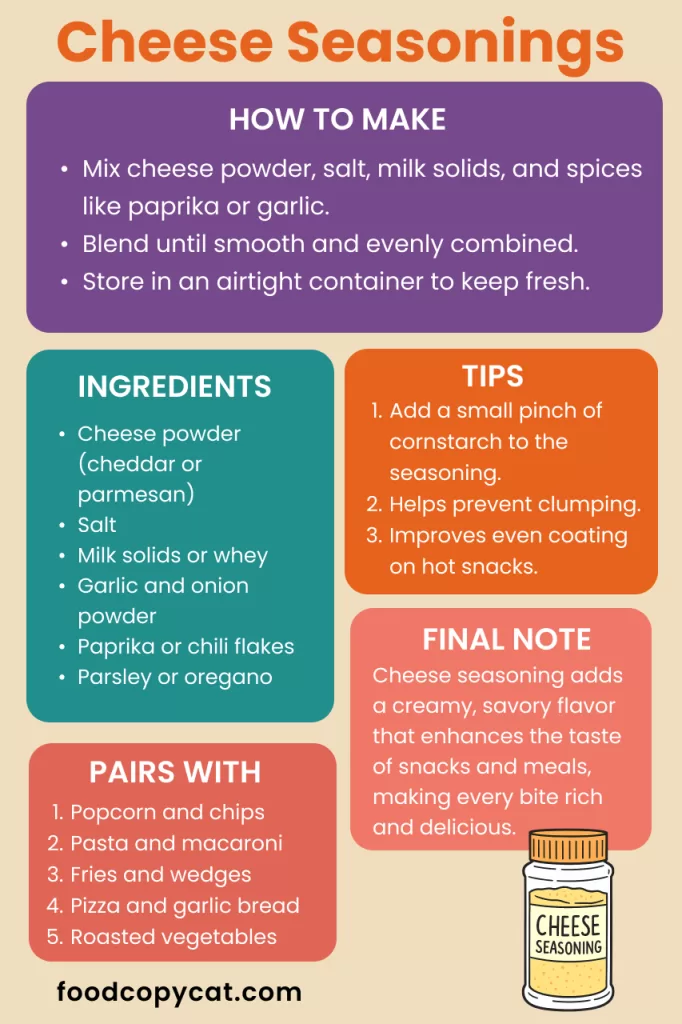
Making cheese seasonings is simple and quick. Start by combining powdered cheeses such as cheddar and parmesan with spices like garlic powder, onion powder, paprika, mustard powder, salt, and pepper. Mix them thoroughly in a bowl until fully combined. Once blended, store yourCheese seasonings in an airtight jar to keep it dry and flavorful. This homemade mix can last for several weeks and is perfect for sprinkling on popcorn, fries, pasta, vegetables, or even eggs, providing a savory, cheesy flavor every time.
Key Ingredients
- 1 cup cheddar cheese powder
- 2 tablespoons parmesan powder
- 1 teaspoon garlic powder
- 1 teaspoon onion powder
- ½ teaspoon paprika
- ¼ teaspoon mustard powder
- ½ teaspoon salt
- ¼ teaspoon black pepper
Instructions
1. Gather All Ingredients
Measure out all the powders and spices accurately. Preparing ingredients in advance ensures a smooth mixing process. Using small bowls for each ingredient can make combining easier and prevents skipping anything. Accurate measurement guarantees consistent flavor in every batch. Being organized at this stage saves time and ensures that your cheese Cheese seasonings will have the perfect balance of cheesy, tangy, and savory notes for all your dishes.
2. Combine Cheese Powders
Add cheddar cheese powder and parmesan powder into a large bowl. These powders form the base flavor of the seasoning. Mix lightly to combine before adding spices. Using a whisk helps break up lumps and ensures a uniform texture. A good base mix ensures that each pinch of your Cheese seasonings delivers consistent cheesy flavor for snacks, pasta, or vegetables.
3. Add Spices and Cheese seasonings
Add garlic powder, onion powder, paprika, mustard powder, salt, and black pepper. These spices bring aroma, heat, and depth to the mix. Stir well to ensure even distribution. Skipping any spice can affect flavor, so take care to include each one. Gradually adding spices allows adjustment according to personal taste. Properly blended spices enhance the overall taste without overpowering the cheese flavor.
4. Mix Thoroughly
Use a whisk or spoon to mix all ingredients thoroughly. Mixing evenly ensures every bite has consistent flavor. Break down any clumps in the cheese powders to avoid uneven texture. For extra smoothness, sift the mixture through a fine sieve. Proper mixing ensures the seasoning is ready for immediate use and that the spices and cheese powders are evenly distributed in every serving.
5. Taste and Adjust
Taste a small amount of your Cheese seasonings. Check salt, spice, and cheese balance. Adjust according to your preference, adding more cheese powder for richness or paprika for heat. Small tweaks make a big difference. Tasting before storage ensures the final seasoning is balanced and flavorful, perfect for popcorn, fries, pasta, or roasted vegetables.
6. Store Properly
Transfer the Cheese seasonings to an airtight container or shaker jar. Proper storage keeps moisture out and prevents clumping. Store in a cool, dry place, away from sunlight. Label with the date for freshness tracking. Stored correctly, your cheese seasoning will remain flavorful for weeks, ready for immediate use whenever you want to add cheesy flavor to your meals.
7. Use as Desired
Sprinkle the Cheese seasonings on snacks like popcorn and fries, or on meals like pasta, vegetables, and eggs. It can also enhance soups, dips, and sauces. Sprinkle while food is hot for the best adhesion and flavor. This versatile seasoning works in countless ways, allowing you to experiment and discover your favorite pairings.
8. Shake Before Use
Shake your jar before every use. Powders tend to settle over time, and shaking ensures even distribution. This guarantees consistent flavor with every sprinkle. Maintaining texture and flavor in each serving ensures your Cheese seasonings delivers the perfect cheesy taste for every dish, every time.
Tips for a Perfect Cheese seasonings
- Use high-quality cheese powders for authentic flavor.
- Add a pinch of chili powder for a spicy twist.
- Store in an airtight container to prevent clumping.
- Avoid moisture exposure to keep the mix dry.
- Adjust salt according to your taste preferences.
What to Serve With

1. Popcorn
Cheese seasonings transforms ordinary popcorn into a delicious snack. After popping, sprinkle the seasoning while it’s hot, then toss gently to coat evenly. The combination of fluffy popcorn and creamy, tangy cheese makes it irresistible. You can also add a little paprika or chili powder for extra flavor. This quick and easy snack is perfect for movie nights, parties, or anytime you crave something crunchy, cheesy, and savory.
2. French Fries
Sprinkle Cheese seasonings over hot fries for a bold flavor upgrade. Toss fries immediately after frying or baking so the seasoning sticks properly. It enhances natural potato flavor with a cheesy, tangy, and slightly spicy kick. Works well for regular fries, wedges, or curly fries. Pair with dips like ketchup, ranch, or garlic aioli for a restaurant-style snack at home. Kids and adults alike will love the cheesy, flavorful coating.
3. Pasta
Add cheese Cheese seasoningsto hot pasta for a quick, creamy flavor boost. Works with spaghetti, macaroni, penne, or even fettuccine. Mix with butter or olive oil to coat noodles evenly. It gives rich, tangy, and savory notes without needing heavy sauces. Combine with chicken, mushrooms, or vegetables for a complete, delicious meal. This is a convenient way to make everyday pasta taste like a gourmet dish.
4. Vegetables
Roasted or steamed vegetables gain a flavorful twist with cCheese seasonings . Sprinkle on broccoli, cauliflower, zucchini, or carrots after cooking. The seasoning balances natural sweetness with savory, cheesy flavor. Toss evenly for full coverage. This method makes vegetables more appealing, especially for kids, turning ordinary veggies into a tasty side dish everyone will enjoy.
5. Eggs
Cheese seasonings enhances scrambled, fried, or boiled eggs. Sprinkle during cooking or before serving for a rich, savory taste. Works well in omelets, breakfast sandwiches, or quick snacks. Combine with herbs like parsley or chives for color and extra flavor. This simple addition turns eggs into a more flavorful and satisfying meal that’s easy to prepare in minutes.
6. Mac and Cheese
Boost boxed or homemade mac and cheese with Cheese seasonings. Sprinkle while cooking or as a topping for baked dishes. Adds tangy, rich flavor that deepens the cheesy taste. Works well for a creamy sauce or a crunchy baked crust. This simple addition makes mac and cheese extra indulgent and delicious, perfect for kids’ meals or comfort food lovers.
Ingredient Substitutes
1. Cheddar Cheese Powder
If cheddar cheese powder is unavailable, finely grate dry cheddar and process it into a fine powder using a food processor. To prevent clumping, add a small pinch of cornstarch and mix thoroughly. This substitute maintains the rich, creamy, and tangy flavor of cheddar in your Cheese seasonings . It works perfectly on popcorn, fries, pasta, or roasted vegetables. Using this method ensures your Cheese seasonings stays smooth and flavorful, giving every dish that classic cheesy taste.
2. Parmesan Powder
Nutritional yeast is an excellent substitute for parmesan powder, especially for vegan or dairy-free options. It has a naturally nutty, cheesy flavor that complements other spices in your seasoning mix. Use the same ratio as parmesan powder to maintain consistent taste and texture. Nutritional yeast also provides additional vitamins, making your Cheese seasonings slightly healthier. It works wonderfully on pasta, popcorn, roasted vegetables, or even in dips, giving that familiar parmesan-like flavor without the dairy.
3. Paprika
Smoked paprika can replace regular paprika to add a deeper, smoky flavor to your Cheese seasonings blend. It enhances roasted vegetables, fries, baked dishes, and even popcorn, giving a rich aroma and slightly smoky taste. Since smoked paprika is stronger than regular paprika, adjust the quantity according to your preference. You can also mix sweet paprika with smoked paprika for a balanced flavor profile. This substitute adds both color and depth, making your cheese seasoning more complex and flavorful.
4. Mustard Powder
If mustard powder is unavailable, Dijon mustard or yellow mustard can be used in small amounts. It adds tanginess and slight heat, enhancing the overall flavor of the Cheese seasonings. Mustard works especially well on fries, popcorn, roasted vegetables, or cheese-based dips. Use sparingly to avoid overpowering the cheesy taste. This substitute ensures the seasoning retains a slight sharpness that complements the cheese powders while maintaining the right balance of savory and tangy flavors in your dishes.
5. Garlic Powder
Fresh garlic can be minced, dried, and ground as a substitute for garlic powder. It provides a stronger aroma and richer flavor compared to pre-made powders. Use this substitute on fries, pasta, roasted vegetables, or any dish that benefits from savory garlic notes. Make sure the garlic is completely dried to prevent clumping in your seasoning. This method preserves the garlic’s natural taste while blending smoothly with cheese powders and spices, giving a bold, flavorful Cheese seasonings mix.
6. Salt
Sea salt or Himalayan pink salt can replace regular table salt in your cheese seasoning. These natural salts offer slight mineral differences that enhance flavor naturally while maintaining the seasoning’s balance. Use the same measurement as regular salt, but adjust slightly according to taste preference. This substitute works well in all dishes where your cheese seasoning is applied, including popcorn, fries, pasta, eggs, and roasted vegetables. It keeps the seasoning flavorful without overpowering the other ingredients.
Nutritional Facts (Per Tablespoon)
| Nutrient | Amount |
| Calories | 40 kcal |
| Protein | 2 g |
| Fat | 2 g |
| Carbohydrates | 3 g |
| Sodium | 150 mg |
| Calcium | 35 mg |
| Cholesterol | 5 mg |
Final Thoughts
Homemade cheese seasonings are a versatile, easy-to-make blend that enhances snacks, meals, and side dishes. From popcorn and fries to pasta and roasted vegetables, this seasoning adds creamy, cheesy flavor without extra effort. It’s healthier and more customizable than store-bought options, allowing you to adjust spices and salt according to taste. Keeping a jar on hand ensures every dish has that irresistible cheesy punch. Try this recipe once, and it will become a staple in your kitchen for everyday flavor.
Checkout more Seasoning Recipes here.
Frequently Asked Questions (FAQs)
What is the best seasoning for cheese?
Herbs like basil, oregano, rosemary, and spices such as black pepper or paprika pair wonderfully with cheese. Garlic powder and chili flakes also enhance its taste.
What are the 4 ingredients in cheese?
Cheese is typically made from four main ingredients: milk, salt, starter culture (bacteria), and rennet, which helps the milk curdle.
Is there cheese seasoning?
Yes, cheese seasoning is a blend of powdered cheese, salt, and spices used to enhance snacks or dishes with a cheesy flavor.
What adds flavour to cheese?
The flavor of cheese comes from bacteria, enzymes, and aging. These elements break down proteins and fats, creating rich, distinct tastes.


