
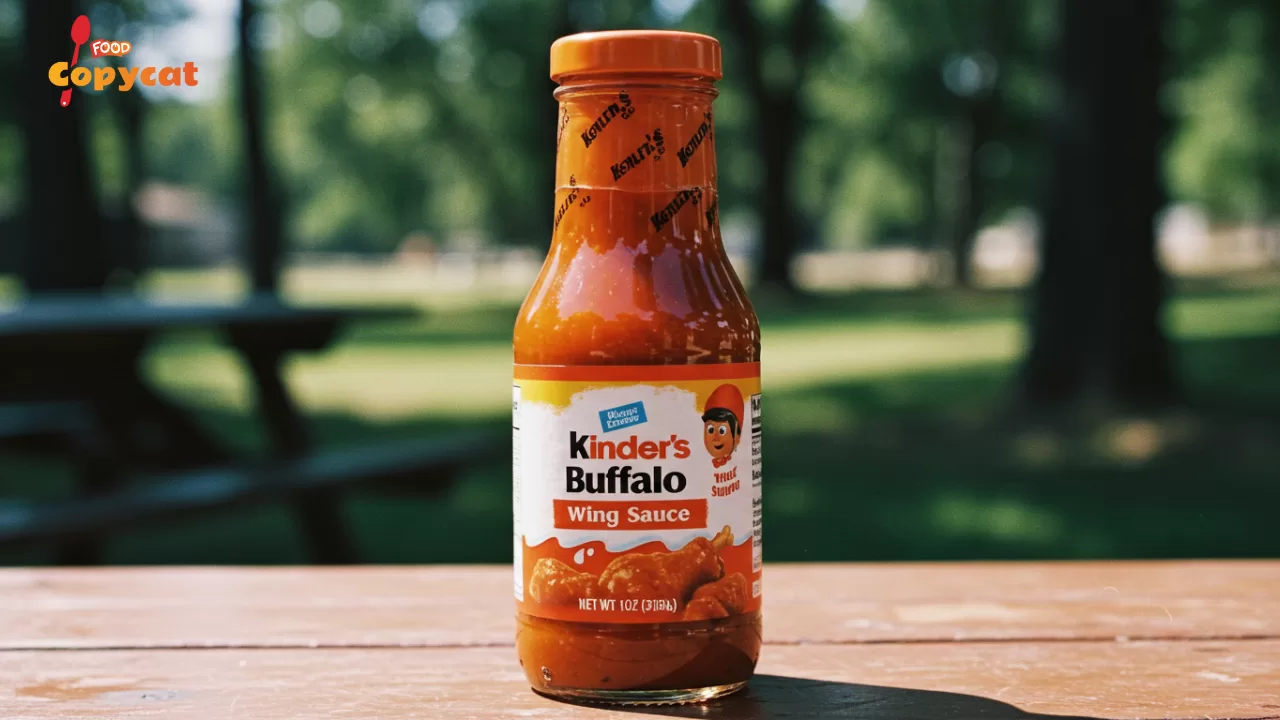
Kinder Buffalo Sauce: 2025 Bold & Delicious
If you’re a fan of spicy, buttery sauces that elevate wings, sandwiches, and dips, kinder buffalo sauce offers a unique twist on the classic buffalo flavor. This sauce blends rich butteriness with tangy heat to deliver a smoother, more balanced wing experience. In this article, you’ll learn how to make your own kinder buffalo sauce at home, understand its key ingredients and substitutions, get tips for perfection, and discover ideal pairings and serving ideas. Whether you’re tossing wings, glazing chicken tenders, or drizzling over flatbreads, this guide ensures you get the most out of your kinder buffalo flavor—while integrating related concepts like buffalo wing sauce, hot sauce, spicy dip, and buttery wing sauce for expanded SEO relevance.
How to Make Kinder Buffalo Sauce?
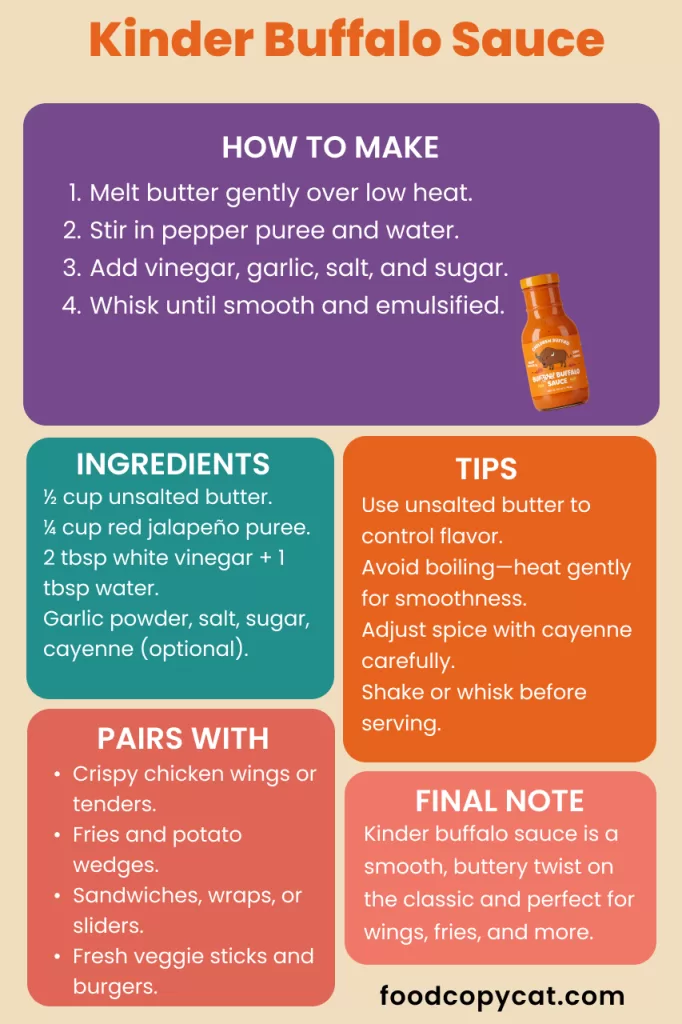
To make kinder buffalo sauce, you essentially emulsify a butter base with chili-pepper puree (jalapeño or red pepper) and balance acidity with vinegar and seasonings. The butter softens the heat and gives a silky texture, while garlic, salt, and sometimes a touch of sugar round out the flavor. Once combined and gently heated, the sauce can be used for wings, dips, or marinades.
Key Ingredients
- ½ cup unsalted butter
- ¼ cup red jalapeño pepper puree (or red pepper puree)
- 2 tablespoons white vinegar (distilled)
- 1 tablespoon water
1 teaspoon garlic powder - ½ teaspoon salt (or to taste)
- ½ teaspoon cayenne pepper (optional, for extra heat)
- 1 teaspoon sugar (or honey)
- Pinch xanthan gum (optional, to stabilize)
Instructions
1. Melt the butter gently
Start by placing unsalted butter in a small saucepan over low heat. Allow it to melt slowly, stirring occasionally to ensure it doesn’t brown or boil. The goal is to create a smooth, silky base for your sauce.
2. Add pepper puree and water
Once the butter has melted, stir in the red jalapeño or red pepper puree along with a tablespoon of water. Whisk well to combine until the mixture looks evenly blended. This forms the spicy slurry that will define the sauce’s kick.
3. Pour in vinegar and seasonings
Next, add white vinegar, garlic powder, salt, sugar (or honey for a natural sweetness), and a pinch of cayenne pepper if you like extra heat. Continue whisking thoroughly so that all the flavors mix into a smooth, balanced liquid.
4. Heat and emulsify
Keep the saucepan over low to medium heat and whisk constantly for about 3–5 minutes. This helps the butter and seasonings emulsify into a creamy sauce. Be careful not to bring it to a full boil, as that can separate the sauce.
5. Optional thickening
For those who prefer a slightly thicker sauce, add a very small pinch of xanthan gum. Whisk until it dissolves completely and the sauce takes on a smooth, velvety texture.
6. Taste and adjust
Take a small taste test. If the sauce feels too tangy, add a little more butter to soften the sharpness. If it’s too mild, sprinkle in a touch more cayenne. Adjust the salt, sugar, or vinegar until the flavor matches your preference.
7. Cool and store
Allow the sauce to cool for a few minutes, then transfer it into a glass jar or squeeze bottle. Store it in the refrigerator. Remember to give it a good shake before using, as the sauce may thicken slightly while chilling.
8. Use or reheat
When ready to enjoy, gently warm the sauce over low heat (avoid boiling). Toss it with crispy chicken wings, drizzle over fries, burgers, or sandwiches, or even serve as a zesty dipping sauce.
Tips for a Perfect Kinder Buffalo Sauce
- Use unsalted butter so you control sodium.
- Always emulsify gently—rapid boiling may separate the sauce.
- Shake or whisk before use if sauce has separated slightly in storage.
- Use fresh pepper puree rather than jarred for best flavor.
- Adjust heat slowly—a little cayenne goes a long way.
What to Serve With

1. Buffalo Wings
The most iconic pairing for kinder buffalo sauce is crispy chicken wings. Whether you fry them for crunch or bake them for a lighter option, tossing them in this buttery, spicy sauce creates a flavor-packed coating that clings beautifully to the wings. The tang from the vinegar and the smooth butter base balance the heat, making every bite addictive. Pair with celery sticks and blue cheese dip to complete the traditional buffalo wing experience.
2. Chicken Tenders / Nuggets
Kinder buffalo sauce makes an excellent dipping companion for chicken tenders or nuggets. Its silky texture coats each piece evenly, offering a punch of flavor that enhances even the simplest fried or baked chicken. The buttery undertone softens the spice, making it a kid-friendly yet exciting option for adults as well. Serve on game nights, at parties, or as a quick snack when you want something both crispy and saucy.
3. Sandwiches & Wraps
A drizzle of kinder buffalo sauce can completely transform sandwiches and wraps. Imagine a grilled chicken sandwich layered with lettuce, tomatoes, and cheese—finished off with a tangy-spicy buffalo drizzle. Or try it in a turkey wrap for an unexpected kick. The buttery spice of the sauce blends with savory meats and fresh veggies, creating layers of flavor that elevate simple sandwiches into gourmet bites.
4. Fries & Potato Wedges
Potatoes and kinder buffalo sauce are a match made in flavor heaven. Drizzle it over hot, crispy fries or roasted potato wedges for a restaurant-style treat at home. If you prefer dips, mix the sauce with creamy ranch or mayonnaise for a spicy aioli-like dip that complements the crispiness of the potatoes. This pairing works great as a side dish for burgers, sandwiches, or simply as a snack during movie nights.
5. Veggie Crudités
Kinder buffalo sauce isn’t just for meat lovers—it pairs wonderfully with fresh vegetables. Use it as a dip for celery, carrots, cucumbers, and bell peppers. The fresh crunch of raw veggies balances the sauce’s tangy heat, offering a lighter and healthier snacking option. This twist on the classic ranch dip makes veggie platters exciting and flavorful, perfect for parties, family gatherings, or even a quick after-work snack.
6. Burgers & Sliders
One of the most creative ways to enjoy kinder buffalo sauce is by adding it to burgers or sliders. Spread it on the bun, drizzle it over the patty, or even mix it into the mayo for a buffalo-infused spread. The sauce enhances beef, chicken, or even veggie patties with its bold, buttery flavor. It adds moisture, spice, and a tangy kick that makes every bite memorable—especially when topped with melted cheese and crisp lettuce.
Ingredient Substitutes
1. Butter
If you’re looking for a dairy-free option, unsalted butter can easily be swapped with vegan butter or ghee. Vegan butter keeps the sauce rich and creamy without compromising flavor, while ghee adds a slightly nutty depth that enhances the overall taste. Both alternatives still deliver the smooth texture needed to balance the spice.
2. Jalapeño Pepper Puree
If red jalapeño puree isn’t available, a mild hot sauce such as red pepper sauce is a practical substitute. Since hot sauces often contain extra vinegar, reduce the added vinegar in the recipe slightly to avoid an overly acidic flavor. This swap maintains the spicy tang but with a bit more convenience.
3. White Vinegar
For a fruitier tang, you can replace white vinegar with apple cider vinegar. However, because apple cider vinegar has a stronger flavor, use around 1½ tablespoons instead of the full amount. This substitution keeps the acidity but introduces subtle fruity undertones that pair well with chicken and vegetables.
4. Sugar
Refined sugar can be swapped for natural sweeteners like honey or maple syrup. Honey adds a smooth, floral sweetness that balances spice, while maple syrup gives a deeper, earthy note. Both options also help thicken the sauce slightly, creating a luscious coating for wings or fries.
5. Cayenne Pepper
If cayenne pepper isn’t on hand, finely ground red chili flakes make a good alternative. To use them effectively, dissolve the flakes in hot water or oil first, then strain for a smoother texture. This ensures the sauce retains its silky consistency while still delivering the fiery heat.
6. Xanthan Gum
When xanthan gum isn’t available, a cornstarch slurry works as a reliable thickener. Simply mix ¼ teaspoon of cornstarch with water until smooth, then whisk it into the sauce while simmering. This gives the sauce body and helps it cling better to wings and fries without altering the flavor.
Nutritional Facts
| Nutrient | Per Tablespoon (approx.) |
| Calories | 40 |
| Total Fat | 4 g |
| Saturated Fat | 2 g |
| Carbohydrates | 1 g |
| Sugar | 0.5 g |
| Sodium | 100 mg |
| Protein | 0 g |
Final Thoughts
Kinder buffalo sauce isn’t just a typical wing coating—it’s a buttery, smooth twist on the traditional buffalo flavor. Unlike standard versions that lean heavily on heat, this sauce offers a balanced mix of spice, tang, and creaminess, making it approachable for all palates. By preparing it at home, you can adjust the flavor to your liking, creating a sauce that’s mild and rich or bold and fiery.
Versatile and delicious, kinder buffalo sauce shines in more ways than one. Toss it with crispy chicken wings, drizzle it over fries, burgers, or nachos, or serve it as a zesty dip alongside veggies and snacks. Its buttery base gives every dish a layer of depth, while the gentle heat ensures it complements rather than overpowers. Whip up a batch, explore creative pairings, and enjoy this modern take on a beloved classic.
Checkout for more Sauce Recipes here.


